• ABOUT
  • PORTFOLIO
  • PRIOR
  • TEAM
  • NEWS
  • CONTACT
  • Investors
REDCO
  • ABOUT
  • PORTFOLIO
  • PRIOR
  • TEAM
  • NEWS
  • CONTACT
  • Investors

Many Are Gazing Into the Downturn Crystal Ball

https://www.globest.com/2019/02/01/many-are-gazing-into-the-downturn-crystal-ball/

SIOR Northern California chapter recently held its annual kick-off event and panelists addressed the challenges and opportunities in the CRE market, and when will the slowdown occur.
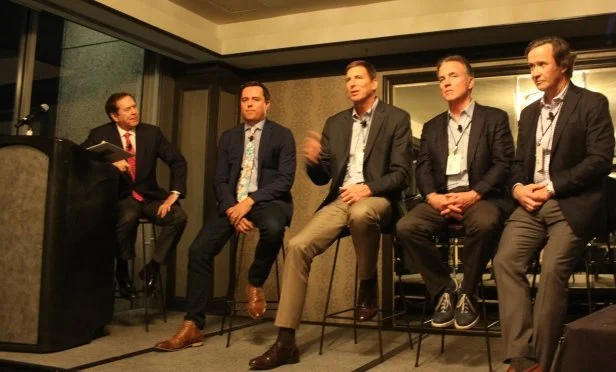
Developers weighed in on challenges, popular markets and slowdown predictions at the SIOR event (credit: Jeff Weil).

Developers weighed in on challenges, popular markets and slowdown predictions at the SIOR event (credit: Jeff Weil).

SAN JOSE — What are the challenges and opportunities in the Northern California commercial real estate market? And of course, the burning question is when will the next slowdown occur?

The SIOR Northern California chapter held its annual kick-off event at the Silicon Valley Capital Club last week to address some of the most pressing issues in the market today. Moderator Jordan Schnitzer, president of Harsch Investment Properties, peppered the group with questions on market trends, popular markets and slowdown predictions.

Panelists included Scott Lamson, president, Northwest region, Prologis; Don Little, senior vice president of development with Trammell Crow Northern California; Steve Briggs, chief investment officer, LBA Realty; and Chris Freise, managing partner and cofounder at Lift Partners. The panel began by offering a 30,000-foot view of their companies and/or where growth opportunities are occurring.

Freise explained that Lift was started four years ago. With a start-up, of course, there are challenges.

“We have to hustle for deals. There is pressure with construction costs and higher taxes in California,” Freise said. “But there is a lot of opportunity in Seattle and the Bay Area. There is a great quality of life in Northern California.”

Little pointed out there are a lot of jobs but not enough housing in the Bay Area. As a result, affordable housing burdens are often put on a project, he said. Lamson concurred, saying the cost of living in the Bay Area makes it difficult to raise families.

In looking at projects represented by the four firms, Lamson outlined that Prologis has 30 million square feet under construction, averaging 25 million square feet per year for the past three years. He said Prologis has the infrastructure in place for projects in Tracy, where the firm has 250 million and 600 million under construction, with 1 million permitted.

Specifically, Prologis has 160 million square feet in the West, broken down as follows–65 million square feet in Southern California, 40 million square feet in Northern California, 15 million square feet in Seattle, and 10 million square feet in Denver and Reno.

“I thought Tesla would hurt the Reno market but that hasn’t happened in our project there,” Lamson says.

Lamson went on to discuss the phenomenon of multi-story industrial buildings; a development technique that is commonplace in Japan. It makes sense because all floors affect each other, he observed.

“On every project, we ask, ‘can we build multi-stories?’” Lamson pondered. “I’m not sure where our next multi-story building will be: either the East Coast or California.”

Briggs says 15 to 20% of LBA’s business is e-commerce and the Denver, Reno and Tracy markets constitute a “young business” for the firm.

When discussing the hottest areas and trends, it is no surprise that the topic of opportunity zones came up. Freise said Lift is taking advantage of those projects, in addition to industrial and urban development opportunities.

Little also chimed in on the cautions and benefits of opportunity zones.

“Opportunity zones are frothy but the advantages are gravy,” he indicated. “It opens the doors to entrepreneurial capital.”

Little went on to say that Trammell Crow was not a big believer in Livermore or Morgan Hill but now has a project in Morgan Hill scheduled to break ground in fourth quarter 2019. The project is 16 miles from San Jose. Still, labor woes continue to be an issue.

“Labor has become a factor, especially in Oakland but even in Tracy,” Little says.

Freise pointed out that areas of interest for Lift are Oakland, Redwood City and San Jose’s downtown, which is “on a trajectory and there is a lot of room to run in general. However, San Francisco is tight as a drum,” he observes.

Briggs said interest rates and liquidity have a big impact on the market but in general, Seattle and West Los Angeles are the most robust. LBA is cautious about San Jose, however, transit-oriented walkable space is in demand.

Also of caution is exactly when a slowdown will occur, but some are not as concerned as one might think.

“We’d love to see a nice little recession: a good old-fashioned hiccup, not a 2008,” Briggs said.

Little pointed out that the difference in 2008 and now is that banks are more disciplined and the market is forward looking. Lamson agreed that the economy is on more solid footing but says technology may be out over its skis.

“Tech is concerning because it reminds me of 1999 and 2000, but we are in a better position,” Lamson said. “And, e-commerce won’t slow down.”

Sunday 02.24.19
Posted by Chris Freise
 

Meet the new generation of developers building downtown San Jose

DTSJ+Skyline.jpg

https://www.bizjournals.com/sanjose/news/2019/01/03/san-jose-development-boom-dillabough-freise-goog.html

Gary Dillabough may have plans to develop or revamp some of the most anticipated projects and buildings in downtown San Jose, but he doesn’t like to think of himself as a developer.

“Hopefully we’re people who can create an urban community or great user experiences,” said the 55-year-old real estate and venture capital investor. Dillabough, along with real estate guru Jeff Arrillaga, founded and leads a company called Urban Community, which captures the legacy he’s hoping to create as an “urban community builder.

“If we do our jobs well, that’s what people, hopefully, will say,” he said.

And while San Jose’s downtown revival story has been dominated by talk of Google and its mega campus plans, the momentum started well before the tech titan announced in 2017 that San Jose was the next “it” place.

Dillabough is part of a tenacious group of investors and developers — or urban community builders — who have been laying the foundation in recent years for San Jose’s downtown growth after several false starts.

Dillabough photographed at the top of Bank of Italy Building

Dillabough photographed at the top of Bank of Italy Building

Downtown enthusiasts say this time, the momentum is real and lasting, and while longtime developers in the area have been critical to the city’s success, downtown has been buoyed by a new generation of investors who have visions for the commercial core that reach far beyond their own property lines.

Downtown San Jose has more than 30 development projects in its pipeline totaling more than 23 million square feet of potential new office space, 7,600 new residential units and more than 650 new hotel rooms, according to Business Journal research. Those numbers include projects that have been proposed, entitled or are under construction.

Scott Knies, executive director of the San Jose Downtown Association, says the current momentum started a few years ago, when new investors began picking up and reimagining Class B buildings that had sat underutilized for decades.

“Speaking to this new generation of owners, they were coming in with entirely different expectations,” Knies said. “They were trying to look at, ‘Well, this district is kind of dead during the day, so we need more offices here.’”

Gary Dillabough is part of a tenacious group of investors and developers — or urban community builders — who have been laying the foundation in recent years for San Jose’s downtown growth after several false starts.

When Dillabough talks about his downtown projects, for instance, he can spit out stats on square footages and parking ratios, but he’s just as quick to draw or pantomime a map filled with paseos and maybe a fountain or two. He muses about retail that may or may not end up in his buildings and is working on new ways to get community members invested — both personally and financially — in his projects. He wants to start a voluntary program for property owners to help out with homelessness in the city.

Urban Community is behind downtown projects like the historic Bank of Italy revamp, a project that will span most of the surrounding block near North First and East Santa Clara streets. That corner has the potential to be downtown’s “main and main,” said San Jose Downtown Manager Blage Zelalich.

Also on that corner is a onetime JC Penney’s store that sat underutilized for years, with the ground level walled off from pedestrians. That was until Lift Partners picked it up as part of a larger portfolio in 2016. The development group set out to make the 101,000-square-foot building a choice location for creative office tenants and landed a lease for the ground level that will bring the first Blue Bottle Coffee shop to the South Bay.

Freise describing Lift Partner’s project at 1 W Santa Clara Street while under construction

Freise describing Lift Partner’s project at 1 W Santa Clara Street while under construction

“There’s a lot of momentum behind it now, but when we were doing it, it took a lot of convincing of retailers, investors and lenders to believe in the story,” said Chris Freise, managing partner and co-founder at Lift Partners. “Selling it kind of snowballs, so you get the Blue Bottle, and Blue Bottle led to other retailers believing that this was an up-and-coming area.”

Chris Freise from Lift Partners, pictured here in 2017, is one of a new generation of younger developers who are buying up and revamping older buildings in downtown San Jose.

Freise is also part of a new generation of owners that had begun investing back in 2016, before Google was a glimmer in most downtown San Jose onlookers’ eyes. That’s when they they picked up a three-building portfolio from Saratoga Capital for $33.5 million. Since then, the group revamped and helped find tenants for the buildings, then sold the portfolio piecemeal for a combined $72.5 million.

“What tenants want was all here, they just didn’t know it,” Freise said. “You couldn’t convince an office tenant to come tour San Jose that was coming from Mountain View or Sunnyvale, but that is not the case anymore.”

Other steadfast downtown San Jose investors and developers have helped the area get to where it is today. Depending how far back one wants to look, the list includes, but is not limited to, The Sobrato Organization, JP DiNapoli, Lew Wolff, Richard Berg, the late Jim Fox and John McEnery, who built the popular San Pedro Square food hall.

Longtime San Jose developer Swenson has a master plan for the city’s Guadalupe River, where the company doesn’t own the land it’s proposing for redevelopment. The effort, unveiled in late 2017, was led by Swenson President Case Swenson.

“There are still some of those kind of original, old-time investors,” Zelalich said. “But there certainly has been, over the last two to three years, this infusion of new blood interested in investing in downtown in a small-scale way, but that makes a very large impact.”

Downtown San Jose development by the numbers

Development projects: 30-plus

Potential new office space: 23 million square feet

Potential new residential units: 7,600

Potential new hotel rooms: 650

Meanwhile, bigger players have started to enter the scene since Google said in 2017 that it plans to build a tech campus on downtown’s far west side.

The one that made the biggest headlines this year was prolific San Francisco-based developer Jay Paul Co., which purchased the 600,000-square-foot CityView Plaza in July for $283.5 million, and then picked up the former JC Penney building for $46 million.

Those purchases marked Jay Paul’s first entrance into San Jose. Not long after the deal closed, the company said it plans to redevelop the nearly block-long mixed-use CityView Plaza, likely into something much larger.

And while investors and city officials agree both Google and Jay Paul’s entrance to downtown is critical to the area’s future growth and momentum, their presence also means the secret is out about San Jose’s new cool status. That comes with some drawbacks.

Most notably, land prices have surged since Google’s interest in the city was revealed in the summer of 2017. New investors have entered the market, paying top-dollar for existing buildings with room for improvement and some developers, like Jay Paul, are moving ahead quickly and confidently.

But that means some of the people who laid that foundation — who invest on a smaller, but impactful scale — are feeling the squeeze. Freise acknowledges that it’s gotten harder, but maintains “there’s still opportunity.”

Dillabough, for his part, says he’s planning to hold back on scouting new deals because of how high land prices have climbed in the last few years. “The pricing just doesn’t make much much sense to me anymore,” he said. “But it’s great that Google came down. Google wasn’t a factor at all in why we came down here, so that was a nice validation.”

Sunday 02.24.19
Posted by Chris Freise
 

70N Second - Silicon Valley Business Journal's Structures 2018 Rehab of the Year Award!

6.jpg 2.jpg 7.jpg 11.jpg 12.jpg

https://www.bizjournals.com/sanjose/news/2018/09/20/long-vacant-historic-office-revamp-draws-tech.html?s=print

Back in 2015, San Francisco-based Lift Partners took a gamble when they bought the downtown San Jose building located at 70 N. Second Street.

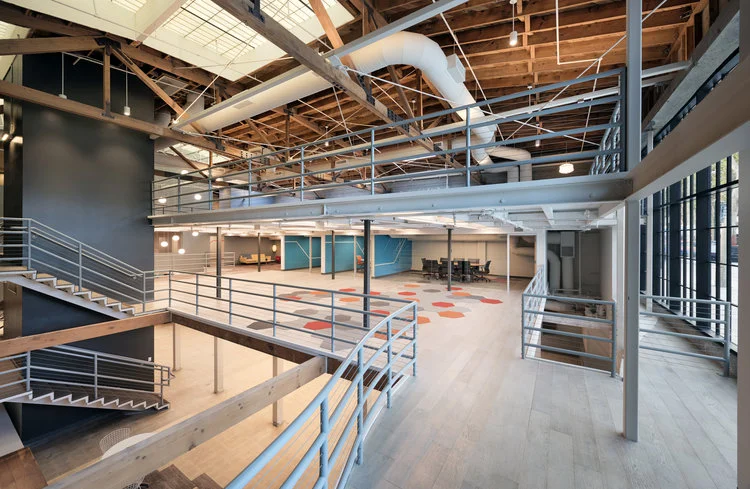
Its exterior needed a facelift, with a dated façade and an interior in need of new design. Outside, the team tore off the existing red tile and ripped out the glass blocks to replace them with large glass windows adding a modern flair and more natural lighting inside.

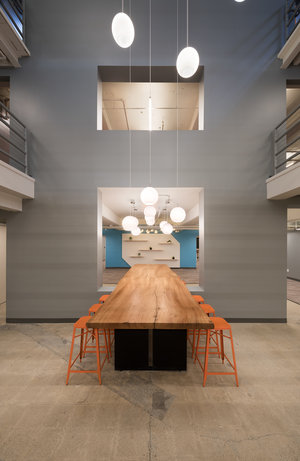
The three-level interior features new wood floors, updated fixtures, a more open-concept design and wooden beams to make for a more appealing space for a tech company. The gamble paid off after the pair fully leased the space to project management startup Wrike earlier this year. The deal has added to the growing diversity of tech companies in downtown San Jose and has been used as an example of downtown’s growing potential.

70 N. 2nd Street

Reuse/Rehab Project

Location: 70 N. Second St., San Jose

Size: 24,000 square feet

Cost: $7 million

Start date: May 2015

Completion date: June 2017

Background: The building, located on a light rail transit line and originally built in 1953, had a dated façade, including red tile coating the exterior and old glass blocks. Before leasing the building to Wrike, the owners were negotiating with WeWork, which was considering using the space for a program providing space and tools for early-stage startups. Negotiations started in August 2015 but fell through after about 12 months. Instead, WeWork ended up leasing a 75,000-square-foot space next door in early 2016.

Amenities: Phone booths, wood beams, breakout meeting spaces, storage rooms and a new kitchen space.

Challenges: Leasing new spaces to tech companies in downtown San Jose was a challenge for building owners at the time the property was purchased in 2015. More recently, startups and larger companies like Adobe and Google have claimed real estate or expanded in downtown. Between 2014 and 2017, when Wrike’s lease was signed, 77 tech companies either signed or renewed leases in Downtown San Jose, Colliers International data shows.

Tenants: The building is fully leased to Wrike, which plans to add 40 new employees to its existing team of 70 in 2018. The company held a ribbon-cutting ceremony in April, which was officiated by San Jose Mayor Sam Liccardo and City Councilmembers Raul Peralez and Johnny Khamis.

Tidbit: The real estate was originally purchased for $3.25 million in 2015 and sold for $10.8 million in 2018.

Sunday 02.24.19
Posted by Chris Freise
 
Newer / Older

Redco Development LLC / Established 1956 & Reborn 2019 / All Rights Reserved
One Embarcadero Center, Suite 1200 San Francisco, CA 94111 / (415) 450-1466